



Oct 16, 2024 | by Sosou Editor | Dangerous Call
1. Phone number 410-801-1825 Basic information
2. Caller Information and International Formats
3. Don't know what to do with the call from 4108011825?
4. Comments from users on phone numbers
5. Some of the lesser-known scams that have recently spread in the United States
6. Articles you may be interested
The phone number 4108011825 is the Wireless phone number registered with the operator Mci Worldcom Communications, Inc. - MD. Usually assigned to mobile phone users. The phone number 410-801-1825 has been registered at Baltimore (Maryland).
The telephone number with area code 410 is widely used as a mobile phone line for individual users. Phone charges will be charged during the call. Answering calls is free.
Phone number 410-801-1825 was registered with the number search service on Oct 16, 2024, viewed 21 times, and searched 33 times.
Phone number has a user rating of 1.0 out of 5.
Baltimore
▶ Latest Review: Totally FAKE "your personal/business/payday/VA/student loan, hardship loan, mortgage or home equity loan, debt relief, debt consolidation, tax debt or government grant application has been pre-approved/approved or needs to be finalized" scam by criminals phoning from the Philippines. This is a massive fake financial services loan scam by Puta'ng Ina Ka criminals calling from the Philippines, stealing your credit card numbers, Social Security number, bank account and personal information. There are thousands of these scams where they pretend to be fake debt collectors threatening you for debts that you do not owe, offer to lower the interest rate on credit cards or a fake student loan that you do not have, offer you a fake home equity loan based on a request that you did not inquire about, consolidate all your credit cards and debts at 0% interest, or give you an unsecured $100,000 line of credit. This call may begin with a huge variety of pre-recorded messages generated using text-to-speech translation software to disguise the origin of this Philippines scam. This scammer uses hundreds of fake company names, speaks your full name to try to gain your trust, and may falsely tell you that they previously mailed you a loan application or that you had previously applied for their loan. The scammer tells you that because of your good credit history, he can offer you lower interest rates on personal and business loans. He asks for your SSN "for verification purposes" and asks for your credit card or bank account number "so they can deposit your (fake) loan". Or the scammer says that to prove your credibility, you must first buy a prepaid gift card and give him the card number and PIN code. This Filipino scammer also uses these same thousands of phone numbers to run many other scams including offering fake Medicare, health insurance, auto insurance and car warranties, pretends to be debt collectors, impersonates Google, AT&T DirecTV or Comcast, or pretends to be fake fundraisers collecting for various charities but they keep all charity donations for themselves. About 50% of North America scam calls come from India and 45% come from the Philippines. Foreign scammers run thousands of fraud, extortion, money laundering scams every day such as posing as a fake pharmacy, fake Social Security officer saying your benefits are suspended, IRS officer collecting on fake unpaid back taxes, debt collector threatening you for fake unpaid bills, fake bank/financial/FedEx/UPS/DHL scams, posing as utility/phone/internet companies, pretending to offer fake health insurance, car warranty, student loan forgiveness, credit card and debt consolidation services, posing as Amazon to falsely say an unauthorized purchase was made to your credit card, posing as Microsoft/Dell/HP/Apple to say your account has been hacked or they detected a virus on your computer, fake "we are refunding your money" or "your account has been auto-debited" scams, fake Google/Alexa listing scams, fake solar panel and home purchase offers, fake fundraisers asking for donations, fake phone surveys, and the scammers try to steal your financial and personal data. Indian scammers often rotate through fake tech support, subscription auto-renewal, and fake pharmacy scams on the same day. Filipino scammers run many auto/home/health/life insurance, Social Security and Medicare identity theft, loan and tax/debt relief scams, and fake charity donation scams. Scammers use disposable VoIP phone numbers (e.g. MagicJack) or they spoof fake names and numbers on Caller ID. Anyone can use telecom software to phone with a fake CID name/number. Scammers spoof thousands of fake 8xx toll-free numbers. CID is useless with scam calls unless the scam asks you to phone them back. CID area codes are never the origin of scam calls since scams use spoofed CID numbers from across the US and Canada, numbers belonging to unsuspecting people, invalid area codes, and fake foreign country CID numbers; e.g. fake women crying "help me" emergency scams spoof Mexico and Middle East CID numbers. Scammers often spoof the actual phone numbers of businesses such as banks to trick you into thinking the call is valid. How can you avoid being scammed by phone calls? NEVER trust any unsolicited caller who: sells something (most unsolicited calls are scams so your odds of saving money are very poor); asks for your Medicare or Social Security number; offers debt relief, loan services, Medicare assistance (people who are old or desperate in debt often fall for scams); offers a free gift/reward; threatens you with arrest/lawsuit; asks you to access a website, download a file, wire transfer money or buy prepaid debit/gift cards; claims your account is frozen or has suspicious activity; says a subscription is refunded or auto-renewed/auto-debited; and all recorded messages. Recordings are far more likely to be malicious scams and not just telemarketer spam. All unsolicited callers with foreign accents, usually Indian or Filipino, are mostly scams. Filipino scammers tend to speak better English than Indian scammers. Filipinos speak English with a subtle accent that may sound Hispanic. Scams often falsely say that you previously contacted them or visited their website. Indian scammers play fake Amazon recordings. Amazon account updates are emailed, not robo-dialed. Many banks use automated fraud alert calls to confirm a suspicious purchase, but always call the number printed on your credit card to verify if the fraud alert is real or fake. Scammers impersonate phone/cable/internet companies, offering fake discounts or service upgrades. Indians impersonate the IRS and Social Security Administration. The IRS/SSA never make unsolicited calls and never threaten to arrest you; they initiate contact via postal mail. Real lawsuits are not phoned in, especially not using recorded threats lacking details; legal notices are mailed/couriered. The police, FBI, DEA never phone to threaten arrest; they show up in person with a warrant. Scammers try to gain your trust by saying your name when they call; your name, address, birthday are public data. Scammers often play recordings speaking English, Spanish, or Chinese that is easily generated using text-to-speech translation software to disguise the origin of their overseas phone room. Some speech synthesis sound robotic, but most AI-speech sound very realistic. To hide their foreign origin, some India scammers use non-Indians in their phone room. Scammers often use interactive voice response (IVR) AI software that combines voice recognition with artificial intelligence, speaks English with American voices, and responds based on your replies. IVR calls begin with: "This is fake_name, I am a fake_job_title on a recorded line, can you hear me okay?"; or "Hi, how are you doing today?"; or "Hello? Are you there?"; or "Hi, may I speak to your_name?" IVR quickly asks you a short question to elicit a yes/no reply so it hangs up if it encounters voicemail. IVR robots understand basic replies and yes/no answers. To test for IVR, ask "How is the weather there?" since IVR cannot answer complex questions. IVR usually transfers you to the scammer, but some scams entirely use IVR with the robot asking for your credit card or SSN. A common myth is IVR calls record you saying "yes" so scammers can authorize purchases just using your "yes" reply, but scammers need more than just a recorded "yes" voice sample from you. Phone/email scams share two common traits: the CID name/number and the "From:" header on emails are easily faked, and the intent of scam calls is malicious just as file attachments and website links on scam emails are harmful. Scams snowball for many victims. If your personal/financial data are stolen, either by being scammed, visiting a malicious website, or by a previous data breach of a business server that stores your data, then your data gets sold by scammers on the dark web who will see you as fresh meat and prey on you even more. This is why some receive 40+ scam calls everyday while others get only 0 to 2 calls per week. If you provide your personal data to a phone scammer, lured by fake 80%-discounted drugs or fake loan and debt services, you receive even more phone scams and identity theft can take years to repair. Most unsolicited calls are scams, often with Indian or Filipino accents. No other countries are infested with phone room sweatshops filled with criminals. Scammers often shout profanities. Just laugh at their abusive insults. Google "Hindi swear words" and memorize some favorites, e.g. call him "Randi Ka Beta" (son of whore) or call her "Randi Ka Betty" (daughter of whore). Scammers ignore the National Do-Not-Call Registry. Asking scammers to stop calling is useless. Scam recordings often tell you to press a keypad number to be placed on their Do-Not-Call list or to unsubscribe from their scam texts/emails, but those keypad commands are fake and they say that just to sound legit. Scammers often provide a toll-free callback number to look like a real business, but they regularly shed old callback numbers so you can never reach the scammers once you have realized that you were scammed. Scammers tell you their callback number just to gain your trust long enough to steal your identity and money and then they frequently switch to using new callback numbers. You do these scammers a favor by quickly hanging up. YOU SHOULD SCAMBAIT ALL SCAMMERS -- slowly drag scammers along on the phone call, provide fake personal and financial data (16 random digits starting with 4 for Visa, 5 for MasterCard), ask them to speak louder and repeat what they said to waste their time and energy.
▶ According to the votes of anonymous users, we temporarily classify the phone number 410-801-1825 as: Dangerous Call. This classification is not authoritative and is for reference only.
▶ To call from overseas:
① [00] International Access Code
② [1] Country Code United States
③ [410] Area Code
④ [801] Phone Prefix
⑤ [1825] Line Number
To dial the US phone number "410-801-1825"
Please dial 00-1-410-801-1825 ・ +1-410-801-1825
▶ Today, with the rapid development of technology, popular scams from all over the world are spreading in the United States and Canada.
These new scams are becoming less and less easy to identify, and if you let your guard down a little, they can be disastrous for you, even causing you to lose all your savings in a short period of time.
▶ Whenever you receive a text message with a link, prize, etc., please do not click the link and reply to the text message.
Do not reply to text messages about unknown prizes, free products, etc. If you get an unconfirmed call, don't believe any words and temptations on the phone.
*The scammers claim they called the tax office and demanded a large amount be paid immediately. Otherwise, they threaten an immediate account blocking.
* Clone accounts of young women on Instagram" accounts are linked to a website (similar to OnlyFans, a popular platform that offers erotic and pornographic content) that promises sexually explicit content that requires the entry of a credit card.
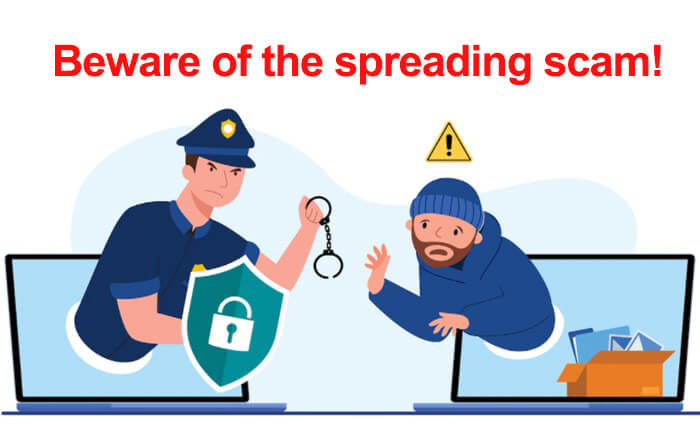
*CEO fraud, scammers pretend to be company bosses and usually contact employees of a company with manipulated e-mail addresses; then they instruct the employees to make payments.
*Cyber criminals try to lure potential victims into a trap by promising large prizes, an inheritance from a stranger, or by pretending that the computer has been hacked.
*A new scam is currently being used to defraud pensioners of over a hundred dollars. Callers hope to convince pensioners to send them "care boxes with information". It costs $99 or eve
*Scammers Pretend to be government officials and claim they intercepted a package from you in the post office. The scammers claim that you allegedly ordered something suspicious and now they need information from you.
*The information about 410-801-1825 in the article comes from the Internet, and it cannot be concluded that it is malicious.
We strive to make the content and information on this website as accurate as possible. However, the information may be out of date and the number owner changes frequently.
▶ To help you understand what types of scams there are and keep them in mind, here are some of the most common scams. Coronavirus Scam, Online Shopping Scam, Lotteries, Sweepstakes, Contest Scam, Investment Scam, Tax Scam, Dating & Love Scam, Bank, Credit Card, Online Account Scam, Job & Employment Scam, Advance Loan Scam.
▶ If you encounter scams, you can greatly reduce your chances of becoming a victim by:
*Don't install any software or go to websites that scammers tell you.
*Please do not answer or call back unknown phone numbers.
*Do not confirm any information over the phone if the caller is pretending to know something about you.
*Do not give unknown people bank details or data such as your ID number, your address or customer accounts with passwords.
*Please do not pay registration fees or shipping costs for so-called free products or prizes.
*Don't be intimidated by threats from scammers posing as office officials. Give them your information or transfer money.
*Please do not use gift cards, prepaid debit cards or bank transfers to make purchases on unconfirmed websites.
▶ If you have been the victim of fraud, please contact the police or the consumer advice center immediately.
If you have shared information, contact the relevant service company and make the necessary changes.
It is important not to panic even in the event of damage and to be able to take the right "handling" and "reaction" immediately.
▶ I Received a Call From an Unknown Number 📞410-896-5460, What Should I do?
▶ Warning⚠️ 4108443395 Hazard Introduction and Treatment Methods
▶ I Received a Call From an Unknown Number 📞410-805-9635, What Should I do?
▶ Warning⚠️ 4109894569 Hazard Introduction and Treatment Methods
▶ Prevent Harassing Calls 410-260-0801 and How to Respond Correctly
▶ Warning⚠️ 4106179451 Hazard Introduction and Treatment Methods
▶ Warning⚠️ 4102748548 Hazard Introduction and Treatment Methods
▶ Warning⚠️ 4103964170 Hazard Introduction and Treatment Methods
Published on:Oct 16, 2024 Updated on:Oct 01, 2026
Due to the nature of this service, there is no guarantee that all phone number reviews are true or accurate. Please contact us if the phone number is unavailable, ownership has been transferred, or the review information is inaccurate.
*Please help us keep your information current and complete. You can correct the information. (We will update the information after we confirm the authenticity)
Not all reviews can be verified, so we cannot guarantee the accuracy or reliability of reviews

Totally FAKE "your personal/business/payday/VA/student loan, hardship loan, mortgage or home equity loan, debt relief, debt consolidation, tax debt or government grant application has been pre-approved/approved or needs to be finalized" scam by criminals phoning from the Philippines. This is a massive fake financial services loan scam by Puta'ng Ina Ka criminals calling from the Philippines, stealing your credit card numbers, Social Security number, bank account and personal information. There are thousands of these scams where they pretend to be fake debt collectors threatening you for debts that you do not owe, offer to lower the interest rate on credit cards or a fake student loan that you do not have, offer you a fake home equity loan based on a request that you did not inquire about, consolidate all your credit cards and debts at 0% interest, or give you an unsecured $100,000 line of credit. This call may begin with a huge variety of pre-recorded messages generated using text-to-speech translation software to disguise the origin of this Philippines scam. This scammer uses hundreds of fake company names, speaks your full name to try to gain your trust, and may falsely tell you that they previously mailed you a loan application or that you had previously applied for their loan. The scammer tells you that because of your good credit history, he can offer you lower interest rates on personal and business loans. He asks for your SSN "for verification purposes" and asks for your credit card or bank account number "so they can deposit your (fake) loan". Or the scammer says that to prove your credibility, you must first buy a prepaid gift card and give him the card number and PIN code. This Filipino scammer also uses these same thousands of phone numbers to run many other scams including offering fake Medicare, health insurance, auto insurance and car warranties, pretends to be debt collectors, impersonates Google, AT&T DirecTV or Comcast, or pretends to be fake fundraisers collecting for various charities but they keep all charity donations for themselves. About 50% of North America scam calls come from India and 45% come from the Philippines. Foreign scammers run thousands of fraud, extortion, money laundering scams every day such as posing as a fake pharmacy, fake Social Security officer saying your benefits are suspended, IRS officer collecting on fake unpaid back taxes, debt collector threatening you for fake unpaid bills, fake bank/financial/FedEx/UPS/DHL scams, posing as utility/phone/internet companies, pretending to offer fake health insurance, car warranty, student loan forgiveness, credit card and debt consolidation services, posing as Amazon to falsely say an unauthorized purchase was made to your credit card, posing as Microsoft/Dell/HP/Apple to say your account has been hacked or they detected a virus on your computer, fake "we are refunding your money" or "your account has been auto-debited" scams, fake Google/Alexa listing scams, fake solar panel and home purchase offers, fake fundraisers asking for donations, fake phone surveys, and the scammers try to steal your financial and personal data. Indian scammers often rotate through fake tech support, subscription auto-renewal, and fake pharmacy scams on the same day. Filipino scammers run many auto/home/health/life insurance, Social Security and Medicare identity theft, loan and tax/debt relief scams, and fake charity donation scams. Scammers use disposable VoIP phone numbers (e.g. MagicJack) or they spoof fake names and numbers on Caller ID. Anyone can use telecom software to phone with a fake CID name/number. Scammers spoof thousands of fake 8xx toll-free numbers. CID is useless with scam calls unless the scam asks you to phone them back. CID area codes are never the origin of scam calls since scams use spoofed CID numbers from across the US and Canada, numbers belonging to unsuspecting people, invalid area codes, and fake foreign country CID numbers; e.g. fake women crying "help me" emergency scams spoof Mexico and Middle East CID numbers. Scammers often spoof the actual phone numbers of businesses such as banks to trick you into thinking the call is valid. How can you avoid being scammed by phone calls? NEVER trust any unsolicited caller who: sells something (most unsolicited calls are scams so your odds of saving money are very poor); asks for your Medicare or Social Security number; offers debt relief, loan services, Medicare assistance (people who are old or desperate in debt often fall for scams); offers a free gift/reward; threatens you with arrest/lawsuit; asks you to access a website, download a file, wire transfer money or buy prepaid debit/gift cards; claims your account is frozen or has suspicious activity; says a subscription is refunded or auto-renewed/auto-debited; and all recorded messages. Recordings are far more likely to be malicious scams and not just telemarketer spam. All unsolicited callers with foreign accents, usually Indian or Filipino, are mostly scams. Filipino scammers tend to speak better English than Indian scammers. Filipinos speak English with a subtle accent that may sound Hispanic. Scams often falsely say that you previously contacted them or visited their website. Indian scammers play fake Amazon recordings. Amazon account updates are emailed, not robo-dialed. Many banks use automated fraud alert calls to confirm a suspicious purchase, but always call the number printed on your credit card to verify if the fraud alert is real or fake. Scammers impersonate phone/cable/internet companies, offering fake discounts or service upgrades. Indians impersonate the IRS and Social Security Administration. The IRS/SSA never make unsolicited calls and never threaten to arrest you; they initiate contact via postal mail. Real lawsuits are not phoned in, especially not using recorded threats lacking details; legal notices are mailed/couriered. The police, FBI, DEA never phone to threaten arrest; they show up in person with a warrant. Scammers try to gain your trust by saying your name when they call; your name, address, birthday are public data. Scammers often play recordings speaking English, Spanish, or Chinese that is easily generated using text-to-speech translation software to disguise the origin of their overseas phone room. Some speech synthesis sound robotic, but most AI-speech sound very realistic. To hide their foreign origin, some India scammers use non-Indians in their phone room. Scammers often use interactive voice response (IVR) AI software that combines voice recognition with artificial intelligence, speaks English with American voices, and responds based on your replies. IVR calls begin with: "This is fake_name, I am a fake_job_title on a recorded line, can you hear me okay?"; or "Hi, how are you doing today?"; or "Hello? Are you there?"; or "Hi, may I speak to your_name?" IVR quickly asks you a short question to elicit a yes/no reply so it hangs up if it encounters voicemail. IVR robots understand basic replies and yes/no answers. To test for IVR, ask "How is the weather there?" since IVR cannot answer complex questions. IVR usually transfers you to the scammer, but some scams entirely use IVR with the robot asking for your credit card or SSN. A common myth is IVR calls record you saying "yes" so scammers can authorize purchases just using your "yes" reply, but scammers need more than just a recorded "yes" voice sample from you. Phone/email scams share two common traits: the CID name/number and the "From:" header on emails are easily faked, and the intent of scam calls is malicious just as file attachments and website links on scam emails are harmful. Scams snowball for many victims. If your personal/financial data are stolen, either by being scammed, visiting a malicious website, or by a previous data breach of a business server that stores your data, then your data gets sold by scammers on the dark web who will see you as fresh meat and prey on you even more. This is why some receive 40+ scam calls everyday while others get only 0 to 2 calls per week. If you provide your personal data to a phone scammer, lured by fake 80%-discounted drugs or fake loan and debt services, you receive even more phone scams and identity theft can take years to repair. Most unsolicited calls are scams, often with Indian or Filipino accents. No other countries are infested with phone room sweatshops filled with criminals. Scammers often shout profanities. Just laugh at their abusive insults. Google "Hindi swear words" and memorize some favorites, e.g. call him "Randi Ka Beta" (son of whore) or call her "Randi Ka Betty" (daughter of whore). Scammers ignore the National Do-Not-Call Registry. Asking scammers to stop calling is useless. Scam recordings often tell you to press a keypad number to be placed on their Do-Not-Call list or to unsubscribe from their scam texts/emails, but those keypad commands are fake and they say that just to sound legit. Scammers often provide a toll-free callback number to look like a real business, but they regularly shed old callback numbers so you can never reach the scammers once you have realized that you were scammed. Scammers tell you their callback number just to gain your trust long enough to steal your identity and money and then they frequently switch to using new callback numbers. You do these scammers a favor by quickly hanging up. YOU SHOULD SCAMBAIT ALL SCAMMERS -- slowly drag scammers along on the phone call, provide fake personal and financial data (16 random digits starting with 4 for Visa, 5 for MasterCard), ask them to speak louder and repeat what they said to waste their time and energy.
Area codes in the United States are between 2 and 9. Since the international telephone area code of the United States is 1, and within the United States, the prefix 1 indicates long-distance calls, so the telephone area code of the United States does not start with 1. There are also area codes without a location reference, such as the toll-free 800. The US area code represents which city or region it is.
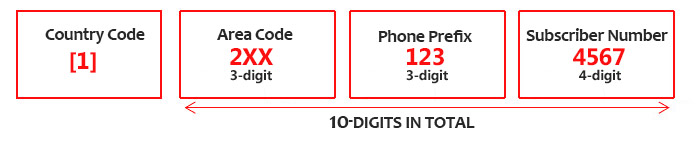
2XX 3XX 4XX 5XX 6XX 7XX 8XX 9XXIn the U.S. and Canada, phone numbers usually consist of 11 digits—1 country code, 3 area code, 3 phone prefix and 4 line number. The country code of USA is +1. It is unique for every country. Area codes direct your calls to a large, broad area. A phone prefix is a smaller area within the area, such as a city. The line number is the specific call you are trying to reach. The following figure shows the structure of the phone number:In the U.S. and Canada, phone numbers usually consist of 11 digits—1 country code, 3 area code, 3 phone prefix and 4 line number. The country code of USA is +1. It is unique for every country. Area codes direct your calls to a large, broad area. A phone prefix is a smaller area within the area, such as a city. The line number is the specific call you are trying to reach. The following figure shows the structure of the phone number:
Due to the nature of this service, there is no guarantee that all phone number reviews are true or accurate. Please contact us if the phone number is unavailable, ownership has been transferred, or the review information is inaccurate.
*Please help us keep your information current and complete. You can correct the information. (We will update the information after we confirm the authenticity)
Look up an address from a list of popular area codes



 201
201 AL
AL