



Jul 12, 2023 | by Sosou Editor | Dangerous Call
1. Phone number 343-307-4602 Basic information
2. Caller Information and International Formats
3. Don't know what to do with the call from 3433074602?
4. Comments from users on phone numbers
5. Some of the lesser-known scams that have recently spread in the United States
6. Articles you may be interested
Phone number 3433074602 is the Landline telephone number registered with the . The phone number 343-307-4602 has been registered at Ontario (Ontario), it is still in use.
Area code 343 is the area code for Ontario. As the main communication method, it is widely used in homes/offices/shops or restaurants. The telephone number starting with 343 is Landline, and local telephone charges will be charged during the call. Answering calls is free.
Phone number 343-307-4602 was registered with the number search service on Jul 12, 2023, viewed 23 times, and searched 49 times.
Phone number has a user rating of 1.0 out of 5.
Ontario
▶ Latest Review: Skip to main content About Contact Press People Opportunities Issues Free Speech Privacy Creativity and Innovation Transparency International Security Our Work Deeplinks Blog Press Releases Events Legal Cases Whitepapers Podcast Annual Reports Take Action Action Center Electronic Frontier Alliance Volunteer Tools Privacy Badger HTTPS Everywhere Surveillance Self-Defense Certbot Atlas of Surveillance Cover Your Tracks Crocodile Hunter Donate Donate to EFF Shop Other Ways to Give Search Email updates on news, actions, and events in your area. Join EFF Lists Copyright (CC BY) Trademark Privacy Policy Thanks Electronic Frontier Foundation Donate VICTORY! Maine Increases Transparency and Accountability for its Fusion Center DEEPLINKS BLOG By Matthew Guariglia June 26, 2023 Share on Twitter Share on Facebook US flag with spying eyes for stars In a major step for reigning in the unaccountable power of fusion centers, the Maine state House and Senate have passed HP 947, An Act to Increase the Transparency and Accountability of the Maine Information and Analysis Center. The bill creates an Auditor position within the Office of the Attorney General whose job it is to conduct regular reviews of the Main Information and Analysis Center’s (MIAC) activities, to keep records, and to share information with the public. The bill also makes any information MIAC shares with private entities a public record and therefore accessible to the public. This bill comes after a years-long concerted effort by Maine activists and concerned citizens who have been fighting for accountability in how MIAC collects, shares, and utilizes information about Mainers. In June 2021, a bill that would have defunded the fusion center entirely passed 88-54 out of the Maine House of Representatives before being defeated in the state senate. Fusion centers are yet another unnecessary cog in the surveillance state—and one that serves the intrusive function of coordinating surveillance activities and sharing information between federal law enforcement, the national security surveillance apparatus, and local and state police, with little to no oversight. Across the United States, there are at least 78 fusion centers that were formed by the Department of Homeland Security in the wake of the War on Terror and the rise of post-9/11 mass surveillance. Since their creation, fusion centers have been hammered by politicians, academics, and civil society groups for their ineffectiveness, dysfunction, mission creep, and unregulated tendency to veer into policing political views. As scholar Brendan McQuade wrote in his book Pacifying the Homeland: Intelligence Fusion and Mass Supervision: “On paper, fusion centers have the potential to organize dramatic surveillance powers. In practice however, what happens at fusion centers is circumscribed by the politics of law enforcement. The tremendous resources being invested in counterterrorism and the formation of interagency intelligence centers are complicated by organization complexity and jurisdictional rivalries. The result is not a revolutionary shift in policing but the creation of uneven, conflictive, and often dysfunctional intelligence-sharing systems.” An explosive 2023 report from Rutgers University’s Center for Security, Race and Rights also provides more evidence of why these centers are invasive, secretive, and dangerous. In the report, researchers documented how New Jersey’s fusion center leveraged national security powers to spy almost exclusively on Muslim, Arab, and Black communities and push an already racially biased criminal justice system into overdrive through aggressive enforcement of misdemeanor and quality of life offenses. After a series of leaks that revealed communications from within police departments, fusion centers, and law enforcement agencies across the country, MIAC came under particular scrutiny for sharing dubious intelligence generated by far-right wing social media accounts with local law enforcement. Specifically, MIAC helped perpetuate disinformation that stacks of bricks and stones had been strategically placed throughout a Black Lives Matter protest as part of a larger plan for destruction, and caused police to plan and act accordingly. This was, to put it plainly, a government intelligence agency spreading fake news that could have deliberately injured people exercising their First Amendment rights. This controversy unfolded shortly after a whistleblower lawsuit from a state trooper that alleged the fusion center routinely violated civil rights. When it comes to fighting these dangerous relics of the War on Terror, activists in Maine are leading the way for the rest of the country. EFF will continue to support organizations and local groups willing to take on fusion centers in their legislatures. Congratulations to the hard-working activists and concerned residents in Maine. Share on Twitter Share on Facebook Join EFF Lists Discover more. Email updates on news, actions, events in your area, and more. Anti-spam question: Enter the three-letter abbreviation for Electronic Frontier Foundation:
▶ According to the votes of anonymous users, we temporarily classify the phone number 343-307-4602 as: Dangerous Call. This classification is not authoritative and is for reference only.
▶ To call from overseas:
① [00] International Access Code
② [1] Country Code United States
③ [343] Area Code
④ [307] Phone Prefix
⑤ [4602] Line Number
To dial the US phone number "343-307-4602"
Please dial 00-1-343-307-4602 ・ +1-343-307-4602
▶ Today, with the rapid development of technology, popular scams from all over the world are spreading in the United States and Canada.
These new scams are becoming less and less easy to identify, and if you let your guard down a little, they can be disastrous for you, even causing you to lose all your savings in a short period of time.
▶ Whenever you receive a text message with a link, prize, etc., please do not click the link and reply to the text message.
Do not reply to text messages about unknown prizes, free products, etc. If you get an unconfirmed call, don't believe any words and temptations on the phone.

*The scammers claim they called the tax office and demanded a large amount be paid immediately. Otherwise, they threaten an immediate account blocking.
* Clone accounts of young women on Instagram" accounts are linked to a website (similar to OnlyFans, a popular platform that offers erotic and pornographic content) that promises sexually explicit content that requires the entry of a credit card.
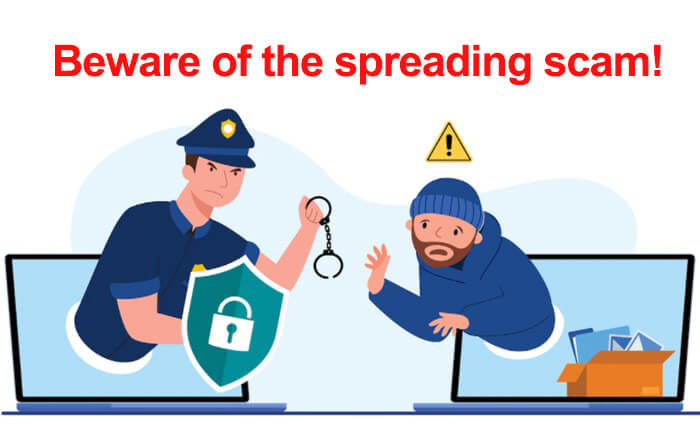
*CEO fraud, scammers pretend to be company bosses and usually contact employees of a company with manipulated e-mail addresses; then they instruct the employees to make payments.
*Cyber criminals try to lure potential victims into a trap by promising large prizes, an inheritance from a stranger, or by pretending that the computer has been hacked.
*A new scam is currently being used to defraud pensioners of over a hundred dollars. Callers hope to convince pensioners to send them "care boxes with information". It costs $99 or eve
*Scammers Pretend to be government officials and claim they intercepted a package from you in the post office. The scammers claim that you allegedly ordered something suspicious and now they need information from you.
*The information about 343-307-4602 in the article comes from the Internet, and it cannot be concluded that it is malicious.
We strive to make the content and information on this website as accurate as possible. However, the information may be out of date and the number owner changes frequently.
▶ To help you understand what types of scams there are and keep them in mind, here are some of the most common scams. Coronavirus Scam, Online Shopping Scam, Lotteries, Sweepstakes, Contest Scam, Investment Scam, Tax Scam, Dating & Love Scam, Bank, Credit Card, Online Account Scam, Job & Employment Scam, Advance Loan Scam.
▶ If you encounter scams, you can greatly reduce your chances of becoming a victim by:
*Don't install any software or go to websites that scammers tell you.
*Please do not answer or call back unknown phone numbers.
*Do not confirm any information over the phone if the caller is pretending to know something about you.
*Do not give unknown people bank details or data such as your ID number, your address or customer accounts with passwords.
*Please do not pay registration fees or shipping costs for so-called free products or prizes.
*Don't be intimidated by threats from scammers posing as office officials. Give them your information or transfer money.
*Please do not use gift cards, prepaid debit cards or bank transfers to make purchases on unconfirmed websites.
▶ If you have been the victim of fraud, please contact the police or the consumer advice center immediately.
If you have shared information, contact the relevant service company and make the necessary changes.
It is important not to panic even in the event of damage and to be able to take the right "handling" and "reaction" immediately.
▶ I Received a Call From an Unknown Number 📞343-252-0075, What Should I do?
▶ Warning⚠️ 3434751022 Hazard Introduction and Treatment Methods
▶ Warning⚠️ 3433883997 Hazard Introduction and Treatment Methods
▶ I Received a Call From an Unknown Number 📞343-402-8737, What Should I do?
▶ I Received a Call From an Unknown Number 📞343-244-9587, What Should I do?
▶ I Received a Call From an Unknown Number 📞343-312-7921, What Should I do?
▶ Warning⚠️ 3433400879 Hazard Introduction and Treatment Methods
▶ I Received a Call From an Unknown Number 📞343-768-1354, What Should I do?
Published on:Jul 12, 2023 Updated on:Sep 16, 2026
Due to the nature of this service, there is no guarantee that all phone number reviews are true or accurate. Please contact us if the phone number is unavailable, ownership has been transferred, or the review information is inaccurate.
*Please help us keep your information current and complete. You can correct the information. (We will update the information after we confirm the authenticity)
Not all reviews can be verified, so we cannot guarantee the accuracy or reliability of reviews

Skip to main content About Contact Press People Opportunities Issues Free Speech Privacy Creativity and Innovation Transparency International Security Our Work Deeplinks Blog Press Releases Events Legal Cases Whitepapers Podcast Annual Reports Take Action Action Center Electronic Frontier Alliance Volunteer Tools Privacy Badger HTTPS Everywhere Surveillance Self-Defense Certbot Atlas of Surveillance Cover Your Tracks Crocodile Hunter Donate Donate to EFF Shop Other Ways to Give Search Email updates on news, actions, and events in your area. Join EFF Lists Copyright (CC BY) Trademark Privacy Policy Thanks Electronic Frontier Foundation Donate VICTORY! Maine Increases Transparency and Accountability for its Fusion Center DEEPLINKS BLOG By Matthew Guariglia June 26, 2023 Share on Twitter Share on Facebook US flag with spying eyes for stars In a major step for reigning in the unaccountable power of fusion centers, the Maine state House and Senate have passed HP 947, An Act to Increase the Transparency and Accountability of the Maine Information and Analysis Center. The bill creates an Auditor position within the Office of the Attorney General whose job it is to conduct regular reviews of the Main Information and Analysis Center’s (MIAC) activities, to keep records, and to share information with the public. The bill also makes any information MIAC shares with private entities a public record and therefore accessible to the public. This bill comes after a years-long concerted effort by Maine activists and concerned citizens who have been fighting for accountability in how MIAC collects, shares, and utilizes information about Mainers. In June 2021, a bill that would have defunded the fusion center entirely passed 88-54 out of the Maine House of Representatives before being defeated in the state senate. Fusion centers are yet another unnecessary cog in the surveillance state—and one that serves the intrusive function of coordinating surveillance activities and sharing information between federal law enforcement, the national security surveillance apparatus, and local and state police, with little to no oversight. Across the United States, there are at least 78 fusion centers that were formed by the Department of Homeland Security in the wake of the War on Terror and the rise of post-9/11 mass surveillance. Since their creation, fusion centers have been hammered by politicians, academics, and civil society groups for their ineffectiveness, dysfunction, mission creep, and unregulated tendency to veer into policing political views. As scholar Brendan McQuade wrote in his book Pacifying the Homeland: Intelligence Fusion and Mass Supervision: “On paper, fusion centers have the potential to organize dramatic surveillance powers. In practice however, what happens at fusion centers is circumscribed by the politics of law enforcement. The tremendous resources being invested in counterterrorism and the formation of interagency intelligence centers are complicated by organization complexity and jurisdictional rivalries. The result is not a revolutionary shift in policing but the creation of uneven, conflictive, and often dysfunctional intelligence-sharing systems.” An explosive 2023 report from Rutgers University’s Center for Security, Race and Rights also provides more evidence of why these centers are invasive, secretive, and dangerous. In the report, researchers documented how New Jersey’s fusion center leveraged national security powers to spy almost exclusively on Muslim, Arab, and Black communities and push an already racially biased criminal justice system into overdrive through aggressive enforcement of misdemeanor and quality of life offenses. After a series of leaks that revealed communications from within police departments, fusion centers, and law enforcement agencies across the country, MIAC came under particular scrutiny for sharing dubious intelligence generated by far-right wing social media accounts with local law enforcement. Specifically, MIAC helped perpetuate disinformation that stacks of bricks and stones had been strategically placed throughout a Black Lives Matter protest as part of a larger plan for destruction, and caused police to plan and act accordingly. This was, to put it plainly, a government intelligence agency spreading fake news that could have deliberately injured people exercising their First Amendment rights. This controversy unfolded shortly after a whistleblower lawsuit from a state trooper that alleged the fusion center routinely violated civil rights. When it comes to fighting these dangerous relics of the War on Terror, activists in Maine are leading the way for the rest of the country. EFF will continue to support organizations and local groups willing to take on fusion centers in their legislatures. Congratulations to the hard-working activists and concerned residents in Maine. Share on Twitter Share on Facebook Join EFF Lists Discover more. Email updates on news, actions, events in your area, and more. Anti-spam question: Enter the three-letter abbreviation for Electronic Frontier Foundation:
Area codes in the United States are between 2 and 9. Since the international telephone area code of the United States is 1, and within the United States, the prefix 1 indicates long-distance calls, so the telephone area code of the United States does not start with 1. There are also area codes without a location reference, such as the toll-free 800. The US area code represents which city or region it is.
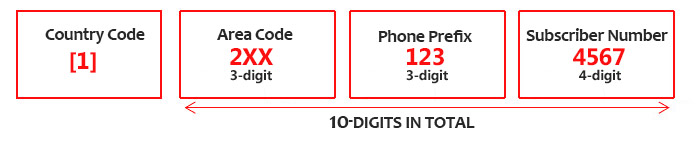
2XX 3XX 4XX 5XX 6XX 7XX 8XX 9XXIn the U.S. and Canada, phone numbers usually consist of 11 digits—1 country code, 3 area code, 3 phone prefix and 4 line number. The country code of USA is +1. It is unique for every country. Area codes direct your calls to a large, broad area. A phone prefix is a smaller area within the area, such as a city. The line number is the specific call you are trying to reach. The following figure shows the structure of the phone number:In the U.S. and Canada, phone numbers usually consist of 11 digits—1 country code, 3 area code, 3 phone prefix and 4 line number. The country code of USA is +1. It is unique for every country. Area codes direct your calls to a large, broad area. A phone prefix is a smaller area within the area, such as a city. The line number is the specific call you are trying to reach. The following figure shows the structure of the phone number:
Due to the nature of this service, there is no guarantee that all phone number reviews are true or accurate. Please contact us if the phone number is unavailable, ownership has been transferred, or the review information is inaccurate.
*Please help us keep your information current and complete. You can correct the information. (We will update the information after we confirm the authenticity)
Look up an address from a list of popular area codes



 201
201 AL
AL